Redirecting to the welcome page...
Redirecting to the property description page...
Redirecting to the property listing page...

Before the French Revolution, education was mainly provided by the Church and remained reserved for the wealthiest families. In the Breton countryside, where agriculture occupies a central place, schooling is not widespread. After 1789, the confiscation of clergy property and the reorganization of education led to a period of decline in education in rural areas. During the nineteenth century, several laws, notably those of Guizot (1833) and Jules Ferry (1882), gradually favoured the development of public schools and made primary education compulsory and free.
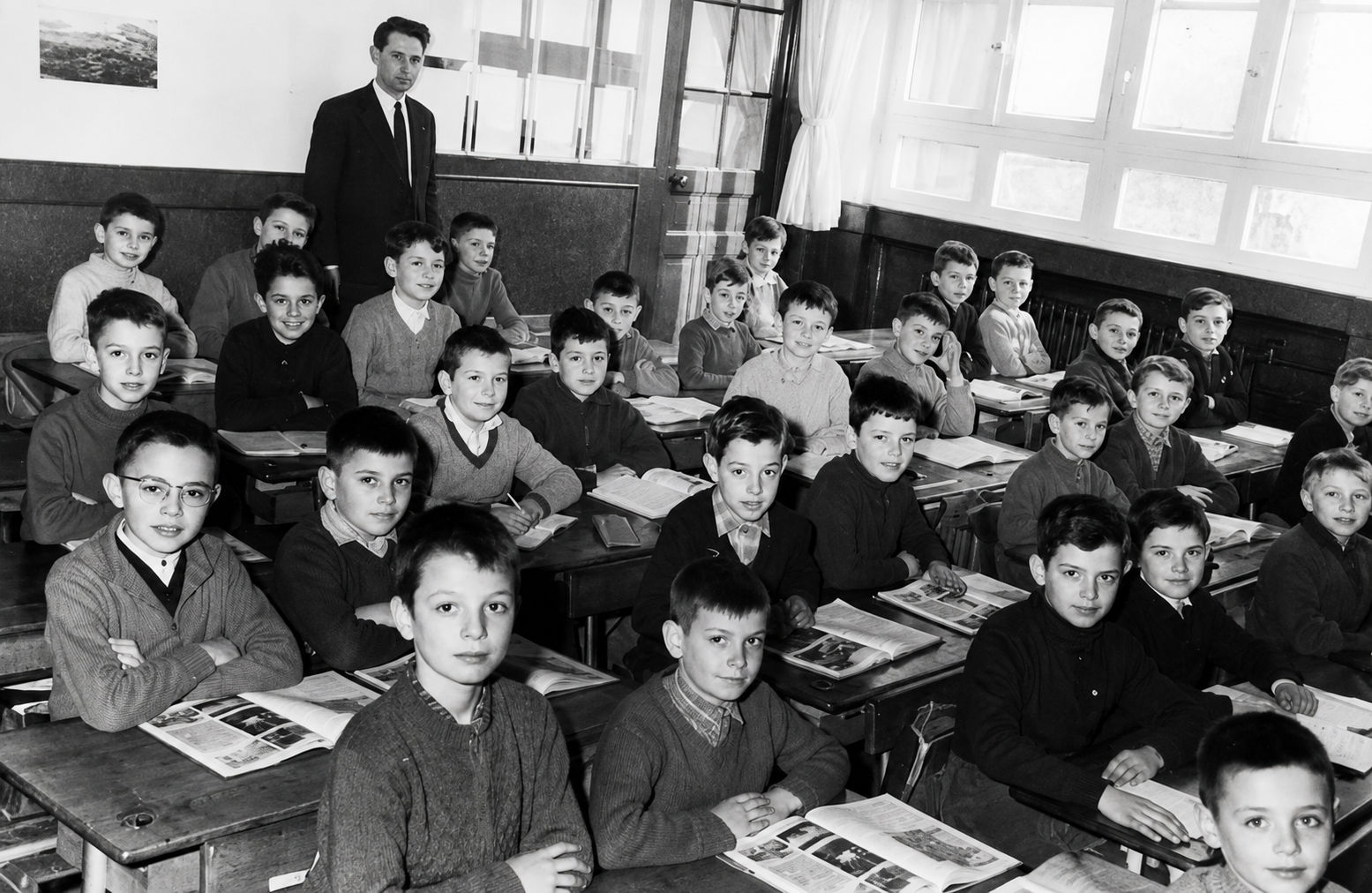
In Béganne, this development was accompanied by the maintenance of private Catholic education. The Saint-Joseph boys' school opened its doors on January 18, 1896 in a building located in Buisson-Rond. It was officially blessed a few months later, during a ceremony bringing together religious authorities, elected officials and a large part of the population.
From 1907, the first director of the school directed the school for twenty-seven years. Thanks to the support of families and volunteering, the buildings were gradually enlarged: a second classroom was created in 1933, then a new extension was built in 1935 with a classroom, a theatre stage and staff accommodation. In 1962, a third classroom, a courtyard, toilets and annex rooms were added to the complex.
After more than a century of activity, the Saint-Joseph school closed for good in 2002. The students were then grouped together at the Sainte-Marie school, which was modernized thanks to the proceeds from the sale of the buildings. In 2003, the new owners began to transform the old school into a home. This project was actually completed twenty years later by Mr. and Mrs. Durant, who converted the former directors' accommodation into a charming cottage: Belle Visnonia, thus offering a new life to this emblematic place of Bégan's heritage.